
PM Modi’s 2026 Gold Appeal: What It Actually Means for Investors
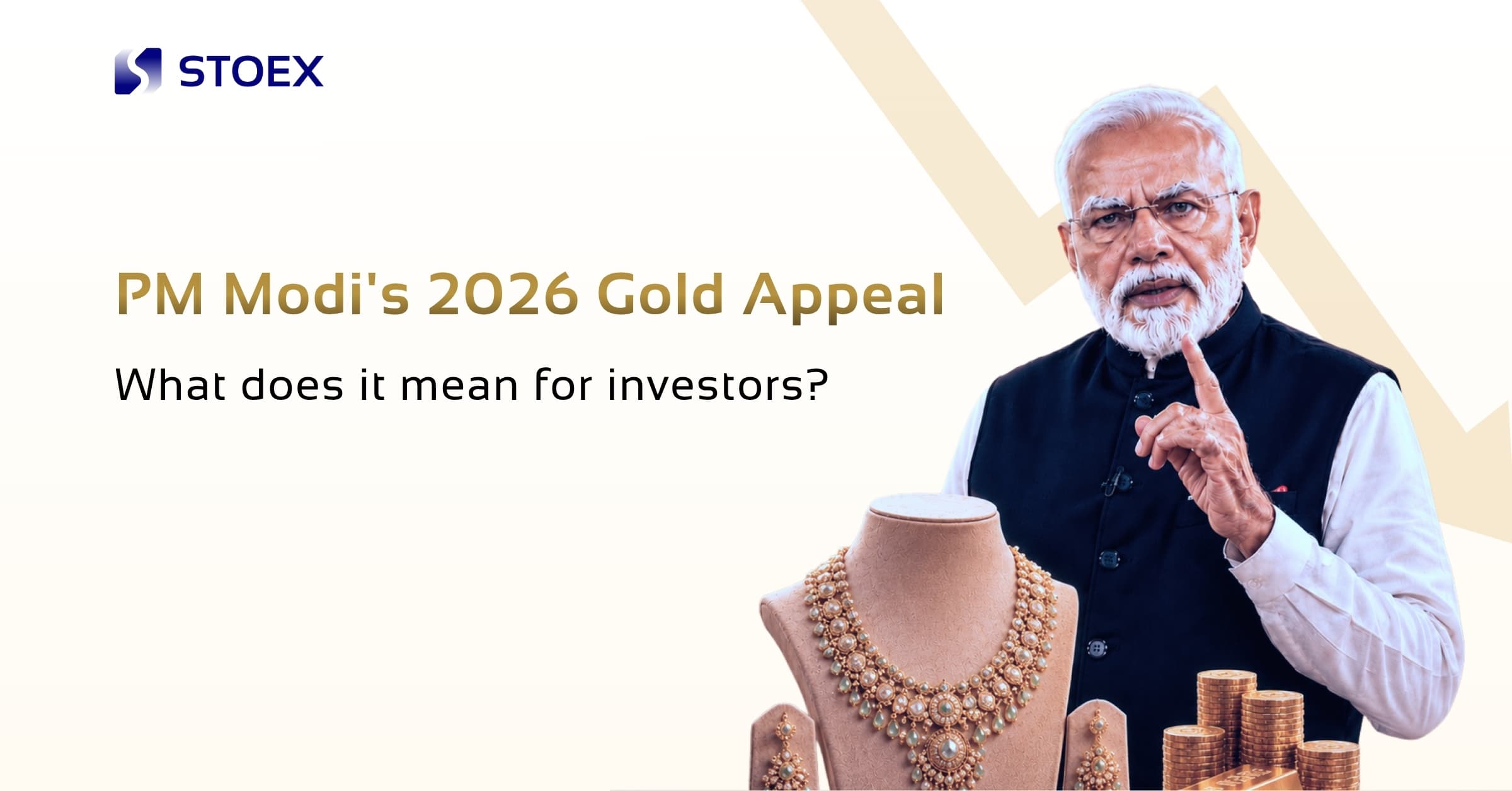
PM Modi’s gold appeal in May 2026 to avoid buying gold jewellery for a year isn’t anti-gold. In fact, the appeal said nothing about formats, but the logic of it points somewhere. India’s gold import bill hit an all-time high of $71.98 billion in 2025-26, and every new gram of physical gold requires a fresh import, while India already holds 25,000+ tonnes privately. Between 1968 and 1990, a similar attempt failed because no alternative existed. In 2026, the alternatives are finally good enough. Formats like verifiable gold offer full gold exposure without triggering a fresh import or sitting opaque in a locker.
India has tried to control its gold appetite three times in 64 years, PM Modi’s Gold Appeal in 2026 being the most recent. Evidently, of all the levers the government could pull to address India’s forex stress, gold is the one that lands in every household equally: the housewife, the college student, and the portfolio manager. No other asset class cuts across demographics the way gold does in India.
Each time, the method to control gold investments changed. The populace of the country also historically resisted each attempt, but 2026 is different. Here’s why.
Before PM Modi’s Gold Appeal: India’s Three Attempts to Change Gold Habits

Gold is much more than an asset for Indians: it is a legacy passed on through generations, rolling emotions and financial security into one. Indian households hold more gold than the combined reserves of the world’s top 10 central banks, and most of it sits idle across vaults, resisting initiatives like the Gold Monetisation Scheme (GMS).
India’s complicated relationship with gold policy didn’t begin in 2026. It began in the years after independence, when the country was bleeding foreign exchange and gold was pouring into private hands faster than it was flowing into national reserves. Here’s a breakdown.
1968: The Gold Control Act.
The first signal was in 1962, in fact. During the India-China war, the Prime Minister Jawaharlal Nehru appealed to all citizens to donate gold and money to the National Defence Fund. The government was signaling that private gold accumulation had a national cost. High demand for gold, paired with little to none indigenous production meant gold imports to an extent that the Indian rupee faced a steep decline, and forex reserves depleted to alarming levels.
The Finance Minister Morarji Desai took multiple steps in the next few years, including:
- Recalling all gold loans given by banks
- Banning forward trading in gold
- Banning production of gold jewellery above 14 carat fineness (1963)
- Introducing a gold bond scheme with tax immunity for unaccounted wealth
When these failed to produce the desired results, Desai came up with the Gold Control Act in 1968, which prohibited private ownership of gold bars and coins outright. All existing holdings of gold coins and bars had to be converted into jewelry, and declared. Goldsmiths were licensed and monitored. The intent was thus:
- reduce speculative hoarding,
- free up foreign exchange, and
- redirect private capital into more productive assets
However, the outcome was less than ideal. Indians shifted into gold jewelry even more, and smuggling cases increased in number. The Act was eventually repealed in 1990 after two decades of negligible impact.
The reason it failed was not Indian stubbornness. It was the absence of an alternative. The underlying demand, for a store of value that was trusted, tangible, and generational, was never addressed.
2015: The Gold Monetization Scheme.
This was when the Indian Government recognized that India has an idle gold productivity challenge, instead of a gold shortage. The private gold reserves in India have been built over generations through both trust and discipline, but how can they be mobilized to strengthen national capital?
The Gold Monetization Scheme, 2015, was a sophisticated attempt at deploying idle household gold. The approach was elegant on paper:
- Deposit your gold with a bank,
- Earn interest, and
- Get it back later
In practice, uptake was negligible. What happened: Indians were unwilling to hand over gold, for which emotional and family value far exceeded the financial value, to an institution they weren’t sure they fully trusted, under terms they found complex and restrictive.
2026: PM Modi’s Gold Appeal to Pause Physical Gold Buying
When PM Modi’s gold appeal came in May 2026, asking Indians to pause physical gold purchases for roughly a year, a few headlines called it a ban. In fact, this was technically the softest intervention of the three we have discussed: no legislation, no scheme, just a public ask.
Yet it arrives at a time when India faces renewed pressure on forex reserves and a growing gold import bill.
More importantly, it arrives when investors finally have credible alternatives.
The Real Argument Hiding Inside PM Modi’s Gold Appeal
Most headlines read PM Modi’s Gold Appeal as anti-gold. It isn’t. It’s anti-format. The concern isn’t that Indians invest in gold, it’s just that every new gram of physical gold requires a fresh import, while 25,000+ tonnes of gold remains mostly idle across Indian households.
The government is not arguing that gold is a bad investment. Gold remains one of the world’s most trusted stores of value and continues to play an important role as a hedge against inflation and economic uncertainty.
The concern is the format of ownership.
Every gram of newly purchased physical gold typically requires fresh imports. Those imports consume dollars, widen the import bill, and add pressure to India’s forex reserves.
India already possesses enormous private gold reserves accumulated over generations. The policy challenge is not a shortage of gold. It is that much of this wealth remains physically stored, economically idle, and difficult to integrate into the financial system.
Viewed through that lens, PM Modi’s gold appeal is less about reducing gold ownership and more about encouraging investors to rethink how they own gold.
As Sudeep Chatterjee, CEO, STOEX puts it, “The lesson from the 2016 Indian demonetization era is not that people respond well to force. The real lesson is that Indians participate at scale when there is a strong national mission, systems are simple, incentives are meaningful, and trust is high.”
How PM Modi’s Gold Appeal Points to Verifiable, Traceable Gold
Previous gold policies struggled because alternatives were either unavailable or unattractive. That is no longer true. Investors today can choose from multiple gold formats depending on their objectives.
Gold ETFs
Gold ETFs provide exposure to gold prices through a SEBI-regulated structure.
They offer:
- High liquidity
- Transparent pricing
- Verified custody
- No storage concerns
For investors seeking portfolio exposure rather than physical ownership, Gold ETFs remain one of the most efficient options available.
The trade-off is that investors own fund units rather than specific grams of gold.
Digital Gold
Digital gold India has become popular because of its convenience. Investors can start with very small amounts and purchase gold instantly through mobile applications. For many younger Indians, digital gold represents their first experience investing in the asset.
However, SEBI’s 2025 advisory on digital gold brought a fundamental question to the surface: not just whether a platform is regulated, but whether an investor can independently verify that their gold exists, is allocated to them specifically, and is held outside the platform’s balance sheet. Regulation is one form of protection. Auditability and traceability are another.
Verifiable Gold
A newer category, that aims to combine physical ownership with digital convenience. Verifiable gold allows investors to purchase gold that already exists in audited and insured vaults while maintaining independent visibility into ownership records.
The objective is straightforward: provide exposure to physical gold without requiring fresh imports, while also improving transparency and auditability.
As Sudeep explains:
“The difference today is that alternatives exist. Gold that already sits in an audited vault, digitally held, instantly liquid, fully traceable, gives you complete exposure to the asset without triggering a fresh import. Productive capital, not idle metal. Policy appeals alone won’t shift centuries of behaviour. But policy plus infrastructure might.”
After PM Modi’s Gold Appeal, Where Should You Put Your Money?
PM Modi’s Gold Appeal should not lead to the question “Should I invest in gold?” Instead, it should encourage investors to evaluate the format through which they own it.
If You Were Planning To Buy Jewellery
The appeal is most directly relevant here. Jewellery requires fresh sourcing, carries substantial making charges, and often suffers from resale inefficiencies. If the purchase is discretionary rather than essential, postponing it may make both economic and practical sense.
If You Hold Gold As A Portfolio Hedge
Your allocation strategy does not necessarily need to change. Gold’s role as a hedge against inflation, currency weakness, and market volatility remains intact. The more important question is whether your current format provides the transparency, liquidity, and efficiency you need.
If You Are Buying Gold As An Investment
Investors now have a broader toolkit than ever before.
- Gold ETFs offer regulation and liquidity.
- Digital gold in India offers accessibility.
- Verifiable gold seeks to combine physical ownership with transparency.
Physical gold continues to hold cultural significance, but as a pure investment vehicle, it is often the least efficient option due to storage considerations, making charges, and limited visibility.
The Gold Conversation Worth Having
India’s relationship with gold is not going to change only because the government is asking for it. What will change it, slowly and durably, is better infrastructure. Systems that make verified, productive gold ownership as emotionally satisfying and as culturally resonant as a locker full of jewellery, but financially smarter, nationally beneficial, and built on trust rather than compulsion.
The future of gold monetization in India will be built on four things: trust, technology, incentives, and liquidity. The policy framework is beginning to align. The technology now exists. The trust has to be earned, platform by platform, gram by gram.
2026 is not the year India stops buying gold. It very well could be the year India starts buying it differently.
As Sudeep explains:
“The difference today is that alternatives exist. Gold that already sits in an audited vault, digitally held, instantly liquid, fully traceable, gives you complete exposure to the asset without triggering a fresh import.”
Your gold should be verifiable, at any given moment. Every gram and balance should be recorded on a tamper-proof ledger that you can check anytime. Visit Stoex today to find out how transparency in gold ideally looks!
Productive capital, not idle metal. Policy appeals alone won’t shift centuries of behaviour. But policy plus infrastructure might.
Frequently Asked Questions About India Gold Policy 2026
While PM Modi’s Gold Appeal is nudging investors away from physical gold to alternate formats, gold should continue to be a part of your portfolio as a hedge. Here’s what you need to know about gold investing in 2026:

Stay Updated with STOEX Insights
Get the latest insights on digital gold, trusteeship, tokenization, and wealth infrastructure directly in your inbox.