
How to Earn Money from Gold in India (2026 Guide)
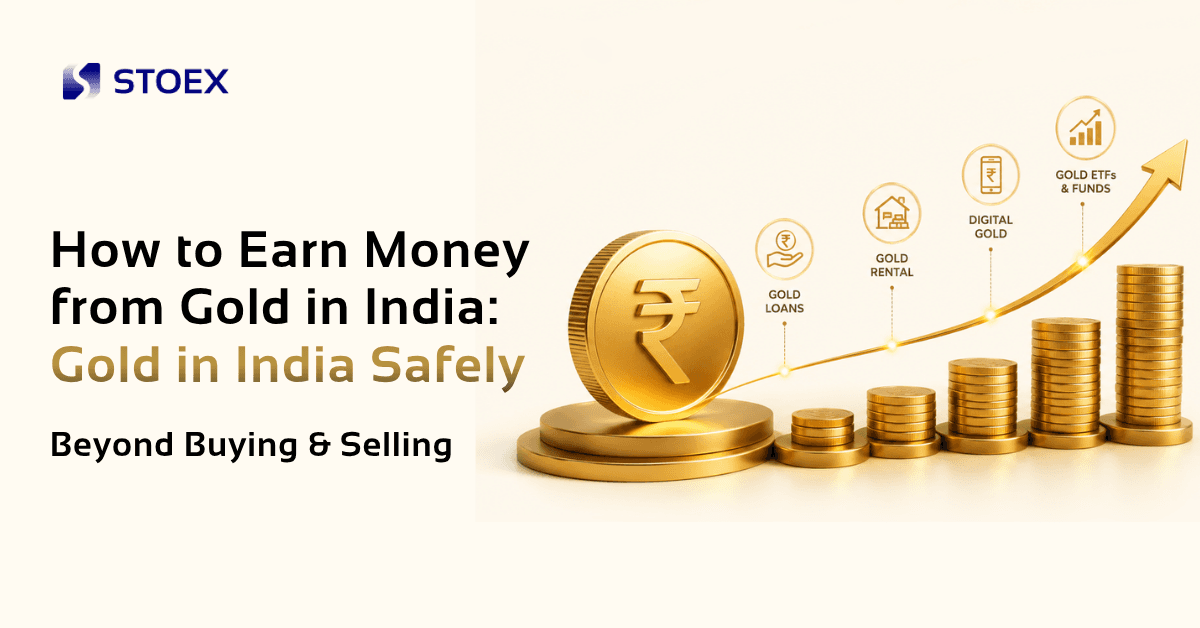
You can earn money from gold in India through price appreciation, interest (in select investment options), and by using gold as part of a well-diversified portfolio. This guide explains the different ways to invest in gold, how to maximise long-term returns, how much gold to hold, what to do with existing gold, and how to choose a trustworthy digital gold platform.
Over the past 20 years, gold prices in India have risen at an average annual rate of around 10%, meaning ₹1 lakh invested in gold could have grown to roughly ₹6.7 lakh.
However, you don’t need to keep buying physical gold to get returns .Investment options like Gold ETFs, gold mutual funds, and digital gold make it easier to earn money from gold without owning more physical gold.
In this article, we’ll break down the different ways to invest in gold in India, how each one works and which option may fit your financial goals.
How Does Gold Actually Make You Money?
Gold doesn’t pay interest or dividends. The only way you earn money is if its price rises between the time you buy and the time you sell. Unlike stocks or bonds, you don’t get dividends.
Over the past 20 years, gold has delivered annualized returns of around 10% in Indian rupee terms. That means ₹1 lakh invested two decades ago would be worth roughly ₹6.7 lakh today.
Several long-term factors like inflation, rupee depreciation and central banks continuing to build their gold reserves, have driven high gold returns.
These factors don’t drive prices higher every year, but over the long term, they’ve helped gold appreciate in value.
However, your returns depend not just on owning gold, but on how you own it. You benefit the most when your investment closely tracks the market price of gold.
For example, gold jewelry immediately loses value because of 6-25% making charges, which are rarely recovered on resale. Physical bars and coins avoid making charges but come with storage, insurance and purity concerns.
That’s why Gold ETFs, gold mutual funds and digital gold are often more efficient options. They closely track gold prices while offering greater convenience and lower transaction costs.
If you’re wondering how to invest in gold in India, understanding the strengths and trade-offs of each investment option is the best place to start.
4 Ways to Invest in Gold and Earn Returns
There are several gold investment options available today, each offering a different balance of returns, liquidity, costs, and convenience.
If you want to own physical gold, jewelry, coins, and bars are familiar options. If convenience and liquidity matter more, Gold ETFs or Gold Mutual Funds may be a better fit. Let’s look at each option.
How to Earn Money from Gold Using Gold ETFs
Gold ETFs let you earn from gold price appreciation without buying or storing physical gold. They track domestic gold prices, trade on the stock exchange like shares, and qualify for long-term capital gains tax after just 12 months.
Unlike jewelry, there are no making charges or purity concerns. Your main cost is the fund’s annual expense ratio, which is typically between 0.5% and 0.8%.
When choosing a Gold ETF, don’t look at expense ratio alone. Liquidity matters too, as higher trading volumes usually mean better buy and sell prices. That’s why funds like Nippon India Gold BeES, SBI Gold ETF, HDFC Gold ETF, Kotak Gold ETF and ICICI Prudential Gold ETF are among the most popular choices.
You’ll need a demat and trading account to invest, and ETFs can only be bought or sold during market hours.
Best for: Investors with a demat account who want liquidity and market-linked pricing.
Earn Money from Gold Through Mutual Funds
Gold mutual funds (fund-of-funds that invest in gold ETFs) suit investors who want gold exposure through a familiar SIP structure without opening a demat account. The trade-off is a longer, 24-month holding period before gains qualify as long-term.
If you’re comparing gold vs mutual funds, remember that gold mutual funds are designed to provide exposure to gold prices rather than diversified equity or debt investments.
Best for: Investors who want to invest in gold through sip’s without a demat account.
How to Earn Money from Digital Gold
Digital gold lets you earn from gold price appreciation without owning physical gold. You can buy fractional amounts, often from as little as ₹100, while the platform stores an equivalent quantity of physical gold in secure vaults on your behalf.
This makes investing in gold far more accessible. Instead of spending ₹5,000 or more on a coin or bar, you can gradually build your investment with smaller purchases that fit your budget.
Before investing, it’s important to understand the costs involved:
- 3% GST on purchases, which isn’t recoverable.
- A 4% to 7% buy-sell spread, which affects your returns when you exit.
- Storage charges after the free storage period offered by most platforms, typically around 0.3% to 0.4% of the gold’s value each year.
These costs matter most if you’re buying and selling over short periods. Over longer holding periods, gold’s price appreciation might be sufficient to offset them.
The more important consideration is the platform you choose. Digital gold isn’t regulated by SEBI, so investor protection depends on the platform’s practices rather than regulatory oversight.
Most digital gold platforms source gold from established providers such as MMTC-PAMP or Augmont. However, regardless of the provider, look for platforms that offer:
- 1:1 physical gold backing
- Segregated customer holdings
- Independent trustee oversight
- Regular third-party audits and a published audit trail
- Transparent redemption for cash or physical gold
Stoex is built around these principles, offering 1:1 physical backing, segregated custody, independent trustee oversight and a tamper-proof transaction ledger that customers can verify.
Ready to start small? Start investing in gold from ₹10 with Stoex.
Best for: Investors who want to build gold exposure gradually, first-time buyers, and anyone who prefers investing through an app instead of buying and storing physical gold.
Earn Money from Physical Gold: Bars & Coins
Buying coins, bars, or jewelry is still the most common way Indians invest in gold. And for many families, jewelry is about much more than investing; it’s tied to weddings, festivals, and traditions.
But if your goal is to grow your money, physical gold isn’t always the most efficient option. jewelry comes with making charges, which typically range from 6% to 25% depending on the design and craftsmanship. Since these charges are usually not recovered when you sell the jewelry, they can significantly reduce your overall returns. On top of that, you’ll also need to think about storage, insurance, and purity verification.
Best for: Investors who prefer tangible ownership and are comfortable managing storage and insurance.
| As of 2026, no fresh issuances of Sovereign Gold Bonds have been announced. However, existing SGBs continue to provide 2.5% annual interest and can be bought or sold through the secondary market, subject to availability. |
Which Gold Investment Option Is Best in 2026?
There isn’t a single best option; each one is solving for a different mix of cost, convenience, and liquidity. Here’s how they stack up:

How to Earn Money from Gold You Already Own
If you already own gold, depending on your financial goals, you can earn from it by monetising idle gold, selling it strategically, or using it as collateral for short-term liquidity without giving up ownership.
Here’s how you can use it.
Gold Monetisation: Earn from Your Idle Gold
The Gold Monetisation Scheme (GMS) lets households deposit idle gold with a bank and earn interest on it. As of 2026, only the Short-Term Bank Deposit (1-3 years) still accepts new gold, and even that is offered at each bank’s discretion.
The government discontinued the Medium-Term and Long-Term Government Deposit components entirely from March 26, 2025, citing weak participation; existing deposits under those categories continue until they mature, but no new gold is being accepted into them.
One crucial factor worth knowing before you deposit: your jewelry gets tested for purity and melted into bullion, so you don’t get the original piece back; only its equivalent gold value plus interest at maturity.
Selling vs. Holding
If you’re sitting on old jewelry and wondering whether selling counts as “earning,” the honest answer is usually no. You typically lose the making charge you originally paid, often 6-25% of the price and sometimes a further deduction for purity testing.
Selling old jewelry is a liquidity move, not a return-generating one. If you don’t need the cash immediately, holding (or converting the value into a more efficient format going forward) tends to work out better than repeated buying and selling of physical pieces.
Gold Loans
A gold loan is a way to access cash without selling. You pledge your gold as collateral and borrow against it, typically at a loan-to-value ratio set by RBI guidelines, while keeping ownership and upside exposure to future price gains.
For many households, this ends up being the more realistic move than liquidating gold outright: you get liquidity now, keep the asset’s long-term appreciation, and pay interest instead of losing the making charge permanently.
| “Gold loans offer a practical bridge between emotional attachment and financial necessity. They allow households to unlock liquidity without parting with an asset that carries deep sentimental value” – Narinder Wadhwa, MD and CEO of SKI Capital Services. |
How to Maximise Returns from Gold Investments
Maximising returns from gold is about choosing the right investment, staying invested for the long term, and making gold part of a diversified portfolio.
Since gold doesn’t generate regular income, your overall returns depend on how efficiently you invest and how long you hold it. Here are five ways to make the most of your gold investments.
1. Invest with a long-term perspective
Gold has historically delivered its strongest returns over longer holding periods rather than through short-term trading. While prices can fluctuate in the short run, gold has consistently preserved wealth across economic cycles.
According to the World Gold Council, “Gold has historically delivered long-term returns while improving portfolio diversification and reducing losses during periods of market stress.”
2. Choose investment-grade gold
Not every form of gold delivers the same investment outcome. jewelry often includes making charges and resale deductions, which can reduce your effective returns. If your objective is wealth creation rather than consumption, consider investment-grade options such as:
- 24K gold bars or coins
- Gold ETFs
- Gold Mutual Funds
- Verified digital gold backed by physical reserves
Choosing the right investment vehicle helps ensure that your returns closely track the actual market price of gold.
3. Invest regularly
Predicting short-term gold prices is difficult, even for experienced investors. Rather than waiting for the “perfect” entry point, investing smaller amounts consistently can help average your purchase cost over time.
This approach is especially useful if you’re building a long-term allocation to gold alongside other investments.
4. Look beyond convenience when investing online
If you’re buying gold online, convenience shouldn’t be the only factor you consider.
Before investing, verify whether the platform offers:
- 100% physical gold backing
- Independent audits
- Secure vault storage
- Transparent ownership records
- Easy redemption options
These factors don’t directly increase returns, but they help protect your investment by ensuring the gold you purchase is genuine, traceable, and securely held.
According to the Digital Precious Metals Association of India (DPMACI), a trustworthy digital gold platform should demonstrate transparent governance through practices such as independent audits, segregated customer accounts, independent custodians, and clear disclosure standards.
5. Rebalance your portfolio periodically
Gold prices don’t always move in line with equities or debt. As a result, your allocation to gold may gradually increase or decrease over time.
Reviewing your portfolio periodically and rebalancing it helps maintain your intended asset allocation while preventing overexposure to any one asset class.
This disciplined approach is widely followed by wealth managers because it encourages investors to systematically buy and sell assets based on allocation rather than emotions.
How Much Gold Should You Have in Your Portfolio?
Gold works best as a complement to your other holdings, not a replacement for them. It doesn’t compound the way equity does, and it doesn’t generate income the way debt does; its job is to reduce how hard your portfolio falls during periods when everything else is under pressure.
A World Gold Council backtest of Indian portfolios found that adding gold in the 7.5-15% range to a standard 70:30 equity-debt mix improved returns and reduced drawdowns over the 19 years to December 2025.
Indian wealth advisors tend to land in a similar band in practice: some point investors toward a straightforward 5-10% allocation, while others use rougher heuristics. Alok Jain, founder of Weekend Investing, suggests a simple age-divided-by-two rule of thumb, where a 30-year-old might hold around 15% and a 60-year-old closer to 30%.
What matters more than hitting an exact number is reviewing your allocation periodically, say, once or twice a year, rather than chasing short-term price movements. If gold has rallied hard and now makes up a much larger share of your portfolio than you intended, that’s a signal to rebalance.
According to Nithin Kamath, Founder & CEO of Zerodha, “No one can predict which asset class will do well. For 99% of people, the best thing to do is diversify and stay invested during the good times and the bad.“
Gold plays an important role in that diversification by helping balance a portfolio alongside equity and debt, especially during periods of heightened market uncertainty.
Gold Is About Lasting Wealth
There isn’t a single “best” way to earn money by investing in gold. The right approach depends on your financial goals, investment horizon, and the type of gold investment you choose. Physical gold serves tradition and gifting. ETFs and mutual funds suit investors who want low-cost, market-linked exposure. Digital gold works for small, flexible amounts, provided you’re deliberate about which platform you trust with custody.
What ties all together is the same principle: earning money from gold is about making informed decisions that align with your financial goals.
And perhaps that’s the most valuable lesson: gold works best not as your only investment, but as one that strengthens everything else in your portfolio.
If digital gold fits your goals, you can start building your gold investment from ₹10 with Stoex, with a focus on transparent ownership and verifiable gold holdings.

Stay Updated with STOEX Insights
Get the latest insights on digital gold, trusteeship, tokenization, and wealth infrastructure directly in your inbox.